


Ghana Homowo Twins Yam Festival: Why Accra's Ga Families Feed Their Twins Before the Harvest

A few days before the drums start for Homowo, something quieter happens in the old lanes of Ga Mashie. Women in white move through the neighborhood with pans balanced on their heads. Walking beside them are children, always in pairs, sometimes two pairs, with white clay marked across their foreheads and shoulders. What's in the pans is mashed yam gone deep orange with palm oil, and sitting on top of it, boiled eggs.
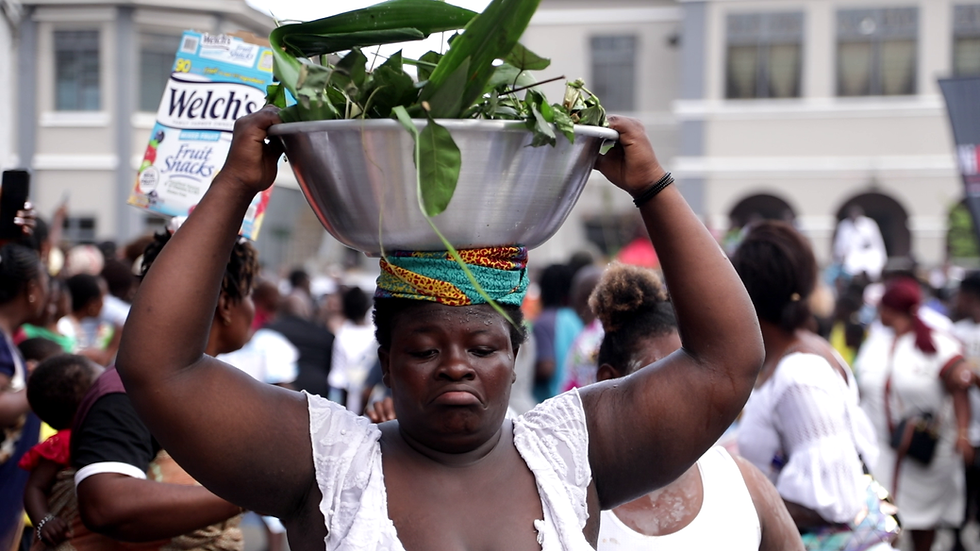


This is the Homowo Twins Yam Festival. It rarely shows up on the festival calendars that visitors consult for Ghana, which tend to list Homowo, Chale Wote, Panafest and stop there. Nobody stages it for an audience. And for anyone trying to understand what the Ga actually believe about power and obligation, it tells you more than the larger festival does.
Twins Are Not Ordinary Children in Ga Thought
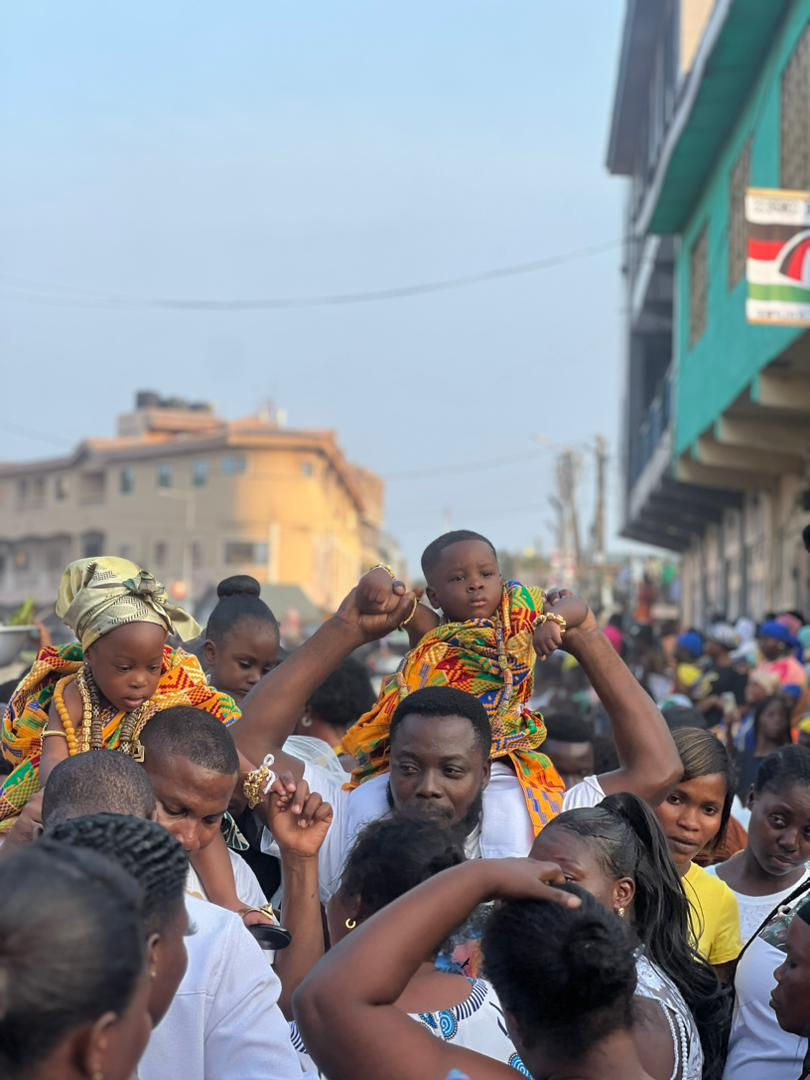
You can't read this ceremony without knowing what twins mean here. They aren't understood as two children who happened to be born together. Twins arrive attached to something, a doubled spiritual presence linked to the bush, to water, to forces that live outside the ordinary order of the compound. A household that has twins gains standing in the community. It also takes on a duty that never expires.
That duty comes around once a year, in the weeks leading into Homowo. The twins of the house have to be fed, honored and publicly acknowledged. A family that lets it slide is understood to be asking for trouble, and not in the loose way people say that about bad luck. The relationship is with particular beings, and neglecting it has consequences.
So this isn't a children's party, whatever it might look like from the outside. A debt is being settled.
Ghana Homowo Twins Yam Festival
The dish at the center of everything is oto: yam boiled, mashed, and worked through with red palm oil until it turns that unmistakable color, then topped with whole boiled eggs. Oto belongs to thresholds. It shows up at naming ceremonies and at other moments when someone is being carried carefully from one condition into another. You don't cook it on a Tuesday.
The eggs are doing most of the symbolic work. Whole, white, unbroken, holding life that hasn't emerged yet, and doubled in form the way the twins themselves are doubled. The twins eat first, sometimes fed by hand. The mothers and the women helping them eat afterward.
Yam matters for its own reasons, and this is where the timing of the ceremony starts to make sense. Homowo means hooting at hunger. It marks a famine the Ga survived and the harvest that finally broke it, so yam in this context is the crop of survival and return. Feeding it to twins in the days before the community celebrates its own deliverance puts the household's spiritual accounts in order first.
Why the Mothers Carry the Bowls on Their Heads
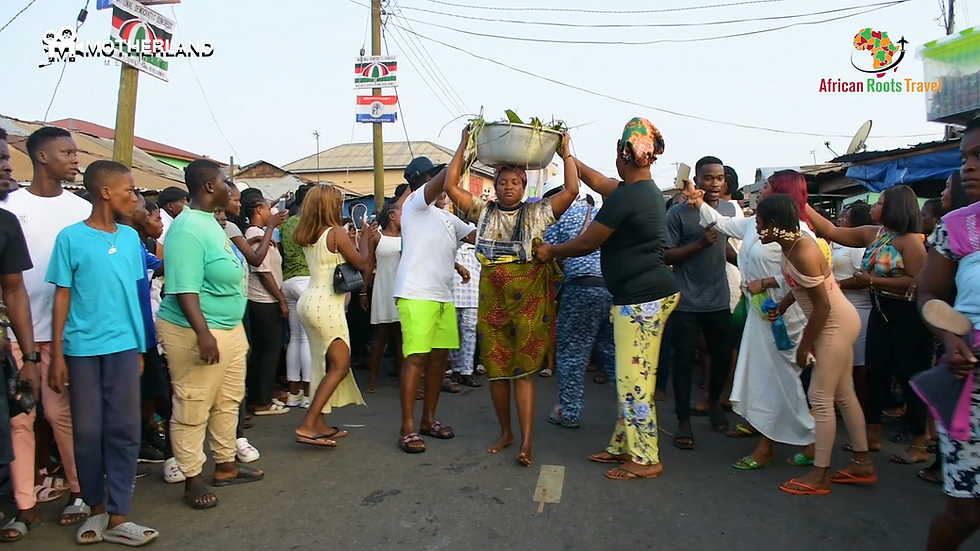
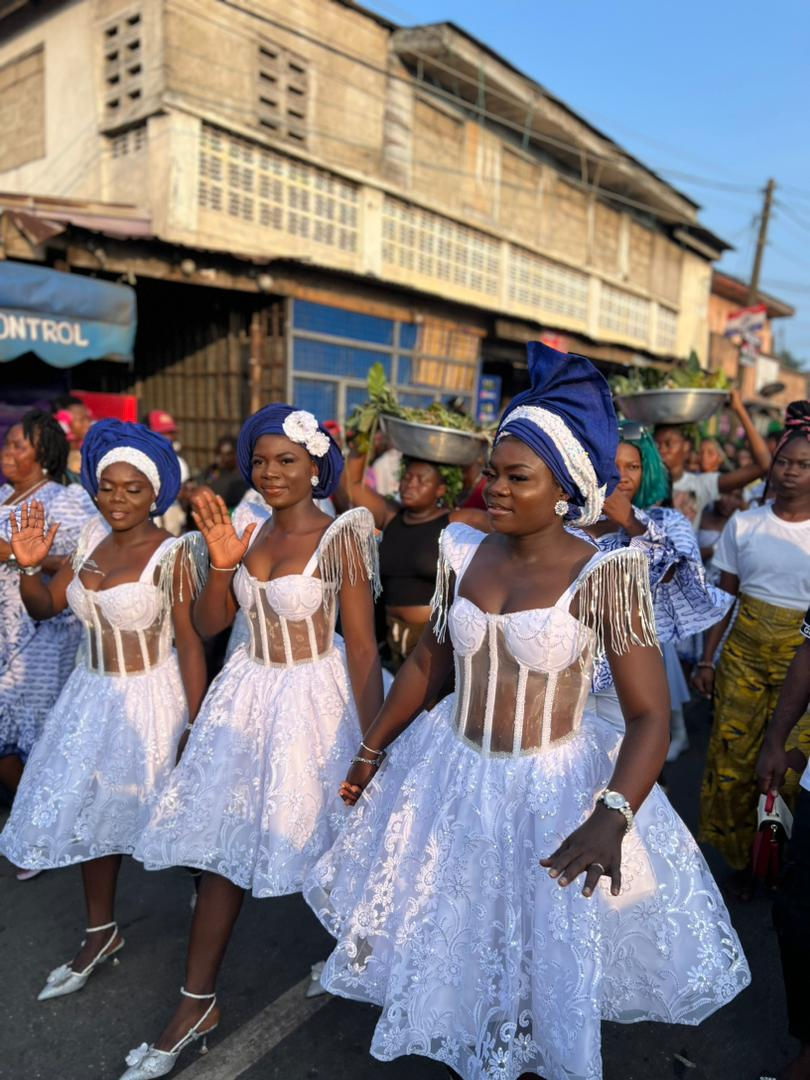
The procession is what people remember: women in white, pans on their heads, moving toward water.
The head isn't a casual place to put something. In Ga thought, as across much of the coast and the Akan world, the head holds a person's soul and destiny. Anything carried there is lifted out of the dust and kept near the spiritual center of the body. Sacred food travels that way. Carrying it on the hip the way you'd carry firewood would be wrong in a way that's hard to overstate.
The carrier matters as much as the carrying. On Homowo Saturday, more or less any woman of a compound might take kpokpoi to a relative's house. Not here. Only a mother of twins carries this bowl, and the pan on her head functions as proof of who she is. Walking it through Jamestown or Ussher Town announces a status that most women in the neighborhood don't hold.
In plenty of households the vessel isn't a kitchen bowl at all. It belongs to the twins, kept with their ritual objects and brought out once a year, washed and renewed at the sea or the lagoon before it comes back home. That's why the procession heads toward water and returns, rather than moving house to house. The point is cleansing, not delivery.
How the Twins Ceremony Differs from Homowo Saturday
Most accounts of Homowo skip this, and it's the comparison that makes the whole thing click.
On Homowo Saturday, food travels outward. Kpokpoi, the steamed fermented corn meal eaten with palm nut soup, leaves a woman's kitchen and goes to her father's house, to her in-laws, to married daughters, to elders who can't cook for themselves anymore. Follow the bowls through the streets and you can read the shape of an entire lineage without asking anybody a question. The distributing is the ritual.
The twins' bowl goes the other way. It converges on two specific, named children. One ceremony scatters a household across its network, the other gathers a household onto its most spiritually loaded members, and both happen in the same town within days of each other.
When and Where It Happens in Accra
The ceremony is concentrated in Ga Mashie, the historic core of the city that takes in Jamestown and Ussher Town, though other Ga towns observe it too. It falls in the days around Homowo, which itself lands somewhere in August or early September depending on which town you're asking about.
That caveat is worth taking seriously if you're planning travel around it. Ga Mashie, Osu, La, Teshie, Nungua, Tema and Kpone all celebrate Homowo on different dates and give the ritual elements different weight. There's no single Ga Homowo, and any guide that presents one has flattened seven traditional calendars into a paragraph.
If You Want to Attend
Go with somebody who has a connection to the community. This is a household rite that happens to take place in public space, which is not the same thing as a public event, and turning up alone with a camera comes across the way it sounds.

Ask before photographing children, every time, and be prepared for the answer to be no. White or muted clothing is a good idea if you'll be anywhere near a procession. Don't cut across the line of movement between the women and the water. If a family offers you oto, take it with your right hand and eat some. You've been included in something, and that's the response it calls for.
The Homowo Twins Yam Festival won't be the loudest thing happening in Accra in August. It might be the one worth understanding first.
African Roots Travel builds Ghana itineraries around exactly this kind of access. We're based in Accra, we've spent years in these neighborhoods, and our Homowo season trips are planned with the people who actually hold the traditions rather than around them. If you want to be in Ga Mashie in August with someone who can walk you in and explain what you're looking at, get in touch. We'd be glad to talk through what the season looks like and what's realistic to see.

Never miss a story from Ghana. Subscribe to get Ghana news and culture, straight from someone who lives it , not just reports on it from a distance.

Maurice Cheetham is a living on the ground in Accra for the past 8 years, bringing a dual perspective to every story one foot rooted in the diaspora experience, the other planted firmly in daily Ghanaian life. From breaking news and politics to fashion, music, food, and the everyday culture that doesn't always make international headlines, Maurice covers Ghana the way only someone actually living it can: with context, nuance, and real proximity to the people and places behind the stories.


Comments